
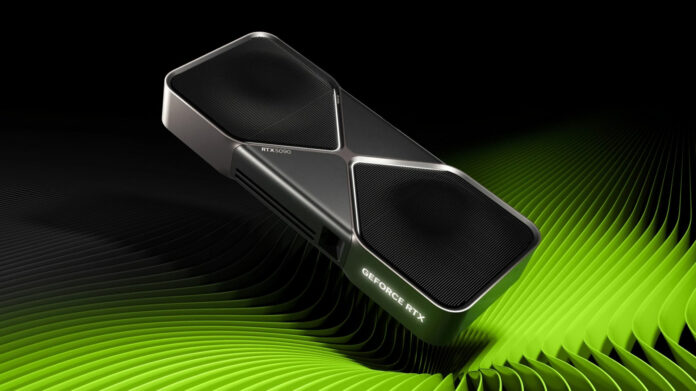
The GeForce 5090 is at the pinnacle of this trend. Each new generation of Nvidia flagship graphics cards has become more power-hungry. It was launched in January 2025 at $1,999, and is currently the most powerful consumer graphics card as of this publication. It outperforms the previous generation’s best GPUs. It was the talk of town before its launch, and not only for its performance. This card is rated at 575 watts, which is a lot of power.
The team at Overclockingrevealed that the Founders Edition card averaged a hefty 550 watts when running “Cyberpunk 2077” at 4K. This is just an average and does not give the whole picture. Reviewers have found the RTX 5090 to be prone “power excursions,” basically short spikes that go beyond the card’s rating. For example, Igor’s Lab (19459027) placed a Founders Edition on their bench, and measured a series increasing spikes. They found it reaches 738 W up to 10 milliseconds, and 901.1 W in moments less than one millisecond.
The figures may seem alarming, however, they are normal for high-end graphics cards. Plus, the spikes are within the capabilities of the ATX 3.1 PSU specifications — but they could pose a challenge for older PSUs that were built to the ATX 2.51 specification. The problem lies with the ATX 2.51 standard, which, unlike successors, did not have any official specification to handle transient loads. An older PSU will interpret these rapid power spikes, as a fault. It will trigger the OCP to shut down the system and protect the components. ATX 3.0 & 3.1 standards, on the other hand, were designed to work under such conditions.
Taming The Beast
You might be worried about your electricity bill after seeing those peak power numbers, but there is good news for efficiency-minded people. You can actually tame the beast without neutering. One enthusiast on Reddit (19459027) discovered that by aggressively undervolting, they could maintain the card’s stock performance, while reducing power consumption by 16 percent, bringing the average drawing to a more palatable 464 Watts. A more moderate undervolt also improved 3DMark scores above factory settings. This is because the undervolt creates thermal room, allowing the GPU boost algorithm to sustain higher average clock speeds (2642MHz vs. 2502MHz stock), resulting in a better score.
Ofcourse, the GPU’s power supply is crucial regardless of whether or not you are overclocking. Nvidia recommends that you use a 1000W power supply to be safe. This recommendation was validated by Overclocking, whose tests showed their system reached a peak power of 856 watts. If you want to push it further, it is wise to ask if overclocking a GPU is safe and choose the right PSU. What if you don’t have the power to give it what it needs? Mezha.Media (19459027) found that intentionally underpowering the adapter by using only three out of four 8-pin connectors created a 450W limitation. This led to a 5% performance loss. If you try to starve it with only two connectors the card will refuse to boot.

