
Enterprises today face a complex landscape of AI coding assistants, but the real need isn’t another isolated tool-it’s a centralized system to orchestrate them all.
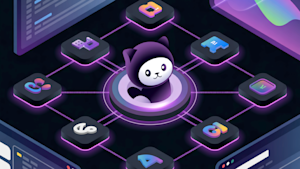
At the Universe 2025 event, GitHub, under Microsoft’s umbrella, unveiled Agent HQ, a groundbreaking framework designed to unify diverse AI coding agents from industry leaders such as Anthropic, OpenAI, Google, Cognition, and xAI. Instead of locking developers into a single AI assistant, GitHub is positioning itself as the foundational platform that seamlessly manages multiple agents simultaneously.
Reimagining AI Collaboration: GitHub’s Unified Agent Ecosystem
GitHub’s vision with Agent HQ is to extend its proven collaborative model-originally applied to Git, pull requests, and CI/CD workflows-into the fragmented world of AI-assisted development. This marks a pivotal shift from what GitHub terms the “first wave” of AI coding, primarily focused on code completion, to a more sophisticated “second wave” characterized by multimodal, agent-driven experiences that feel inherently AI-native.
According to GitHub’s latest Octoverse data, 80% of new developers engage with Copilot within their first week, highlighting AI’s growing role in accelerating software development. Agent HQ aims to build on this momentum by offering a platform where multiple AI agents coexist and collaborate under a unified interface.
What Exactly is Agent HQ?
Building on the recent evolution of GitHub Copilot, Agent HQ transforms GitHub into an open, extensible ecosystem that integrates various AI coding agents directly into the developer workflow. Over the next few months, users with existing GitHub Copilot subscriptions will gain access to agents from multiple providers, all operating within GitHub’s secure environment.
Crucially, Agent HQ preserves GitHub’s core development primitives-developers continue to use Git, manage pull requests, and track issues as usual. The innovation lies in the orchestration layer: multiple AI agents can now function within GitHub’s security perimeter, leveraging enterprise-grade identity management, branch-level permissions, and comprehensive audit logging.
This approach contrasts sharply with standalone AI tools like Cursor or Claude, which often require broad repository access. Agent HQ enforces strict compartmentalization, limiting agent permissions to specific branches and embedding all activity within robust governance frameworks.
Mission Control: Centralized Management for Multiple AI Agents
At the core of Agent HQ is Mission Control, a unified dashboard accessible across GitHub’s web interface, VS Code, mobile apps, and CLI. Mission Control empowers developers to delegate tasks to multiple AI agents simultaneously, monitor their progress, and manage permissions-all from a single, streamlined interface.
Security remains paramount. Unlike other AI integrations that demand extensive repository access, Agent HQ enforces granular controls. Each agent operates with a tightly scoped GitHub token, restricted to specific actions and branches. Agents run within sandboxed GitHub Actions environments fortified by firewalls, preventing unauthorized network access or data leakage unless explicitly permitted.
Distinctive Technical Features: Custom Agents and MCP Integration
Agent HQ introduces two standout capabilities that differentiate it from competitors:
- Custom Agents via AGENTS.md Configuration: Organizations can now define source-controlled configuration files that specify how Copilot and other agents should behave. For instance, a company might mandate the use of a particular logging framework or enforce table-driven testing for all handlers. These rules are versioned alongside the codebase, ensuring consistent AI behavior across teams without repetitive prompting.
- Native Support for Model Context Protocol (MCP): GitHub’s VS Code extension now includes an MCP Registry, enabling developers to discover, install, and activate MCP servers effortlessly. MCP, an emerging industry standard pioneered by Anthropic, facilitates seamless communication between AI agents and external tools. By embracing MCP, GitHub positions itself as the central hub for integrating diverse AI services into developer workflows without redundant integration efforts.
Enhancing Development with Plan Mode and AI-Driven Code Review
GitHub is also rolling out innovative features within VS Code to improve AI collaboration:
- Plan Mode: This feature encourages developers to co-create detailed project plans with Copilot before writing any code. By prompting clarifying questions upfront, Plan Mode helps prevent premature implementation and reduces wasted effort, leading to higher-quality outcomes.
- Agentic Code Review: Leveraging GitHub’s CodeQL engine, the new AI-powered code review system automatically scans pull requests generated by AI agents for bugs and maintainability issues before human review. This two-tiered quality assurance process enhances code reliability and accelerates development cycles.
Strategic Guidance for Enterprises: Embracing Multi-Agent AI Development
For organizations already utilizing multiple AI coding tools, Agent HQ offers a strategic path to unify these resources without sacrificing flexibility. By consolidating agents within a single secure platform, enterprises can mitigate vendor lock-in risks and streamline developer onboarding.
GitHub’s COO Mario Rodriguez advises companies to start by implementing custom agents to encode organizational coding standards and best practices. Once these foundations are in place, enterprises can expand their AI toolkit by integrating additional third-party agents, tailoring their software development lifecycle to their unique needs.
“Begin experimenting with custom agents today,” Rodriguez recommends. “This capability is available now and empowers organizations to personalize their development processes, enhancing productivity and consistency across teams.”

