
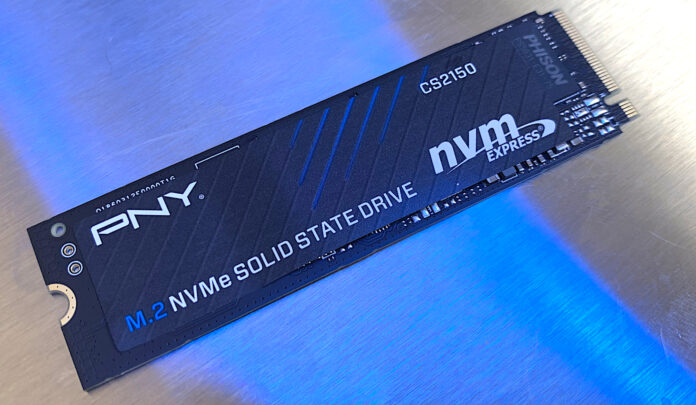
Debunking the Myth: Are PCIe SSDs Always Superior?
There is a widespread misconception that PCIe SSDs inherently outperform SATA SSDs due to their higher speed and bandwidth capabilities. However, this assumption doesn’t always hold true, especially when evaluating real-world applications like gaming performance. While PCIe SSDs offer advantages in certain scenarios, their benefits depend heavily on specific use cases.
Handling Massive Data Volumes: When PCIe SSDs Shine
Professionals such as researchers, engineers, and data analysts frequently manage enormous datasets, often scaling into terabytes or even petabytes. The latest PCIe 5.0 SSDs provide a significant leap in bandwidth, doubling the throughput of PCIe 4.0 models. With theoretical read speeds reaching up to 14,000 MB/s and write speeds around 12,000 MB/s, these drives drastically reduce data transfer times.
For data scientists working with large language models (LLMs) or complex machine learning workflows, this speed boost minimizes bottlenecks during data loading and preprocessing. Tasks like executing intricate queries, accessing extensive training datasets, and saving large model checkpoints become more efficient, ultimately enhancing productivity by reducing idle time.
Accelerating Creative Workflows: Video Editors and 3D Artists
If your profession involves video editing, 3D animation, or graphic design, especially with ultra-high-definition content such as 4K or 8K footage, upgrading to a PCIe SSD can significantly streamline your workflow. The enhanced bandwidth facilitates smoother timeline navigation and faster rendering times, allowing creatives to focus more on their craft rather than waiting on file transfers.
For example, a 3D animator working on complex scenes with large texture files will notice reduced lag and quicker asset loading, which can be crucial during tight production schedules.
Future-Proofing Gaming Systems: Is PCIe 5.0 Worth It?
While PCIe 5.0 SSDs currently offer only marginal speed improvements over PCIe 4.0 drives in gaming, emerging technologies suggest this gap will widen. Microsoft’s DirectStorage API, gaining traction in the gaming industry, optimizes asset streaming by enabling games to load data directly from the SSD to the GPU, bypassing the CPU. This results in significantly reduced load times and smoother gameplay, particularly in expansive open-world titles.
DirectStorage supports both PCIe 4.0 and PCIe 5.0 SSDs, but as game developers and hardware manufacturers continue to optimize for PCIe 5.0, the benefits of faster SSDs will become more pronounced. Investing in PCIe 5.0 storage today could therefore be a strategic move to ensure your gaming rig remains capable of handling next-generation titles efficiently.
About the Author
Dominic Bayley is an Australian technology editor specializing in PC gaming hardware, including laptops, peripherals, and storage solutions. With a passion for cutting-edge tech, Dominic provides in-depth analysis to help enthusiasts make informed decisions.

