
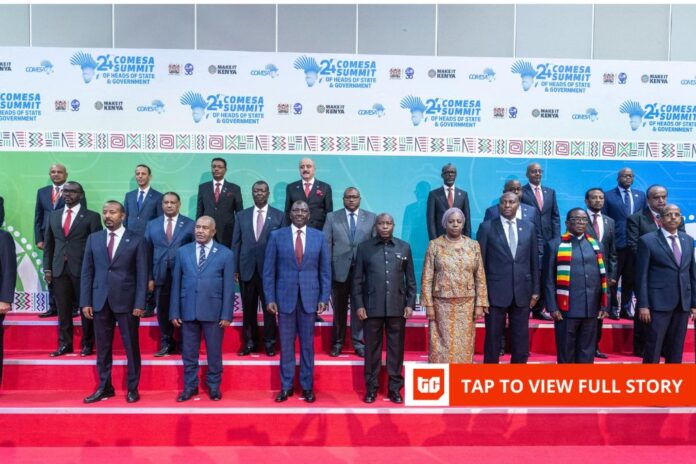
COMESA Unveils Innovative Digital Payment System to Boost Regional Trade
The Common Market for Eastern and Southern Africa (COMESA), a regional economic community comprising 21 member states and representing over 640 million people, has introduced a groundbreaking digital payments platform aimed at simplifying and reducing the cost of cross-border trade within Africa. This initiative is set to empower businesses to transact using their local currencies instead of relying on the US dollar.
Introducing the Digital Retail Payments Platform (DRPP)
The newly launched Digital Retail Payments Platform (DRPP) enables traders to conduct cross-border transactions directly in their respective national currencies. Currently undergoing pilot testing among Malawi, Zambia, and Kenya, the platform is slated for expansion to all COMESA member countries, including key economies such as Ethiopia and Egypt.
Reducing Transaction Costs and Enhancing Financial Connectivity
COMESA aims to slash transaction fees to under 3%, a significant improvement from the existing average cost of approximately 8%. This reduction is expected to make regional trade more accessible, especially for small and medium-sized enterprises (SMEs). The platform’s development involves collaboration with two digital financial service providers and a foreign exchange firm, though their identities remain confidential.
Member States and Economic Significance
COMESA’s membership spans a diverse group of countries across eastern, southern, and northern Africa, including Burundi, Democratic Republic of Congo, Djibouti, Egypt, Eritrea, Eswatini, Kenya, Libya, Madagascar, Malawi, Mauritius, Rwanda, Seychelles, Somalia, Sudan, Tunisia, Uganda, Zambia, and Zimbabwe. Collectively, these nations form one of Africa’s largest trading blocs, boasting a combined Gross National Product exceeding $1 trillion.
Challenges in Intra-Regional Trade
Despite its size, intra-COMESA trade remains modest, accounting for less than 10% of total trade within the bloc. High currency conversion fees and limited financial infrastructure connectivity are primary barriers hindering deeper economic integration.
Unlocking Economic Potential Through Local Currency Transactions
By facilitating easier cross-border payments in local currencies, the DRPP has the potential to unlock billions of dollars in economic value currently constrained by currency exchange inefficiencies. This shift is also expected to contribute to exchange rate stability and alleviate pressure on the US dollar reserves of major economies within the bloc, such as Kenya, Egypt, and Ethiopia, which together represent nearly half of COMESA’s GDP.
Leadership and Strategic Investments
Kenyan President William Ruto, recently appointed as COMESA Chairman, hailed the platform as a pivotal advancement toward deeper African economic integration. He highlighted Kenya’s commitment to regional financial development through increased investments of $100 million each into institutions like the Trade Development Bank and Afreximbank. Strengthening these financial entities is viewed as a critical strategy for fostering sustainable growth across the continent.
Shifting Away from Dollar Dependence
The DRPP is poised to diminish the dominance of the US dollar in regional trade, promoting the use of local currencies such as the Kenyan Shilling and Ethiopian Birr. This transition is expected to enhance the role of domestic currencies in facilitating commerce throughout eastern and southern Africa, thereby supporting broader economic sovereignty and resilience.
Note: Moonshot by TechCabal will return to Lagos on October 15-16, featuring insights from Africa’s top entrepreneurs, technology innovators, and creative minds. Secure your tickets at moonshot.techcabal.com.

