
The Rise of AI Digital Doubles: A New Frontier in Personal and Professional Interaction
AI-generated digital doubles are becoming increasingly prevalent across social media platforms and professional networks. On sites like X and LinkedIn, influencers and thought leaders are offering their audiences the chance to engage with AI versions of themselves. Even creators on platforms such as OnlyFans are deploying AI avatars to interact with fans for a fee. Meanwhile, in China, “virtual human” sales agents are reportedly operated by real people behind the scenes, blurring the lines between human and AI interaction.
What Are AI Digital Clones?
These digital doubles combine several established technologies: ultra-realistic video avatars that mirror a person’s appearance, voice synthesis trained on just minutes of audio, and conversational AI capable of maintaining engaging dialogue. Unlike general-purpose AI like ChatGPT, these clones aim to emulate the unique thought patterns and communication style of the individual they represent, offering a personalized interaction experience.
Who Benefits from AI Clones?
Startups like Delphi, which recently secured $16 million in funding from investors including Anthropic and Olivia Wilde’s Proximity Ventures, specialize in creating AI replicas for celebrities and public figures. These clones engage fans through chat and voice calls, resembling an evolution of platforms like MasterClass but with interactive AI. Delphi emphasizes that modern leaders hold invaluable knowledge but face time constraints and limited accessibility, positioning their clones as a scalable way to share wisdom.
Delphi’s roster includes official AI versions of well-known personalities. For instance, Arnold Schwarzenegger’s digital double greeted me with, “I’m here to cut the nonsense and help you become stronger and happier,” before signing me up for his newsletter. While these celebrity clones may not fully realize the promise of delivering “personalized wisdom at scale,” they effectively serve as tools for fan engagement, mailing list growth, and product promotion.
AI Clones for Everyday Professionals: Potential and Pitfalls
Beyond celebrities, AI clones could offer practical benefits for busy professionals. Many of us juggle multiple commitments and wish we could be in two places simultaneously. Imagine an AI double attending a virtual meeting on your behalf-not to deceive, but to handle routine calls and provide summaries afterward.
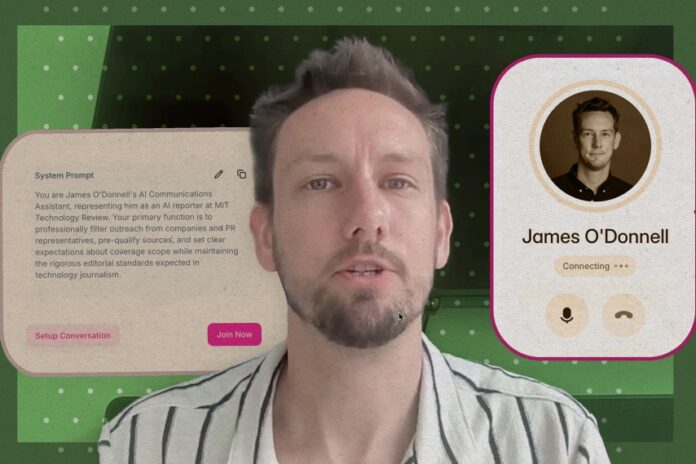
To explore this, I experimented with Tavus, a Y Combinator-backed startup that raised $18 million last year. Tavus creates video avatars that can be trained to reflect your personality and participate in video calls, with subscription plans starting at $59 per month. The company markets these clones as having “human emotional intelligence combined with machine scalability,” targeting roles such as therapists, physician assistants, and potentially reporters.
Creating My AI Avatar: A Hands-On Experience
The onboarding process involved recording myself reading a script to capture my voice and sitting silently for a minute to help the system learn my appearance. Within hours, my avatar was ready. Visually and vocally, it resembled me-though I found its teeth unsettling. However, mimicking my look was the simpler task; the real challenge was whether it could grasp my professional focus and communicate effectively without causing awkward moments.
Using Tavus’s chatbot interface, I shaped my clone’s personality and uploaded around 30 of my articles to provide context. While more extensive data like interviews and notes would have improved accuracy, privacy concerns and third-party consent prevented me from sharing such materials. Despite this limited input, I hoped the clone would perform adequately.
Limitations and Early Challenges
Unfortunately, the clone’s conversational skills were inconsistent. It showed unwarranted enthusiasm for story ideas I would never pursue, repeated itself, and frequently mentioned checking my calendar to arrange meetings-something it couldn’t do without access. Conversations often looped endlessly, leaving no clear way to conclude interactions.
Quinn Favret, Tavus’s cofounder, explained these are typical early-stage issues. Their clones generally rely on Meta’s Llama model, which tends to overpromise helpfulness. Developers using Tavus’s platform often customize how clones end conversations or integrate calendar access, which I had not enabled.
Use Cases Where AI Clones Shine
While my experience was underwhelming, AI doubles can be valuable in other contexts. Influencers seeking to deepen fan engagement or sales professionals aiming to increase outreach might find clones advantageous despite occasional missteps. The risk of a clone misrepresenting you exists, but for some, the benefits outweigh the drawbacks.
Favret noted that Tavus’s larger clients include companies employing clones for healthcare intake processes and job interviews. Additionally, replicas are used in corporate training scenarios, such as sales pitch rehearsals and HR conversations, providing scalable, interactive role-play opportunities.
The Future of AI Clones: Beyond Automation to Meaningful Interaction
Developers promise that AI clones will evolve beyond mere telemarketers or cold callers. Delphi envisions clones delivering “meaningful, personal interactions at infinite scale,” while Tavus highlights their avatars’ “face, brain, and memories” enabling genuine conversations. Increasingly, clients are deploying clones for mentorship roles and decision-making tasks, such as AI loan officers screening applicants.
However, instilling true judgment, critical thinking, and nuanced personal traits in AI remains a distant goal. For now, clones function best when users understand their limitations-like knowing Schwarzenegger’s AI won’t transform you into a fitness icon overnight.
Balancing Efficiency and Authenticity
As AI clones become more sophisticated and human-like, there is a risk that organizations might misuse them for inappropriate decision-making or rely on them in situations requiring genuine human discernment. These models prioritize scalability over perfect accuracy. They can amplify our presence, promote our brands, and handle routine tasks, but they cannot fully replicate the depth of human individuality.
Ultimately, AI digital doubles represent a fascinating blend of technology and identity, offering new ways to connect and communicate-while reminding us of the irreplaceable value of authentic human interaction.

