
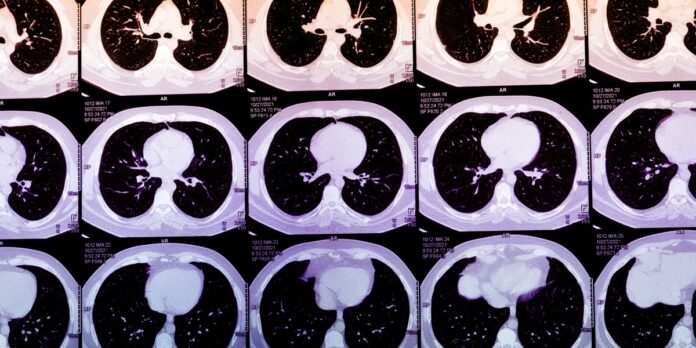
Despite all the modern marvels in cardiology, it is still difficult to predict who might have a cardiac attack. Many people are never screened. Startups like Bunkerhill Health (19459011), Nanox.AI (19459011) and HeartLung Technologies (19459011) are using AI algorithms to screen millions CT scans for signs of early heart disease. This technology could be a major breakthrough in public health. It uses an old tool to identify patients who are at high risk of a heart attack. It is not yet proven at large scale, and raises thorny issues about implementation as well as how we define diseases.
An estimated 20 million Americansunderwent chest CT scans last year, either after an accident or as a screening for lung cancer. They often show evidence of coronary calcium (CAC), which is a marker for heart attacks risk, but this information is buried in radiology reports that are primarily focused on ruling out bone injuries, internal trauma or cancer.
The dedicated testing for CAC is still an underutilized way to predict heart attack risk. Over the course of decades, plaques in heart arteries go through their own life cycle. They harden from lipid-rich deposits into calcium. Heart attacks are usually caused by a rupture of lipid-rich, younger plaque. This causes a cascade of inflammation and clotting that eventually blocks the blood supply to the heart. Although calcified plaque is usually stable, the presence of CAC indicates that younger, rupture-prone plaque may also be present. Coronary artery calcification can be seen on chest CTs and its concentration can also be subjectively described. Normaly, a heart-specific CT is required to calculate a person’s CAC. Algorithms calculating CAC scores using routine chest CTs could, however, vastly increase access to this metric. These algorithms could be used in practiceby alerting patients and doctors to abnormally high scores to encourage them to seek further treatment. The startups that offer AI-derived CAC score are not very large today, but they are growing rapidly. These algorithms will be used more and more, which may help identify high-risk patients that are often overlooked or on the margins.
In the past, CAC scans had a marginal benefit and were marketed towards those who were worried. Most insurers still won’t cover CAC scans. Though attitudes may be changing. Expert groups are recommending CAC scores to refine cardiovascular risk estimations and convince skeptic patients to take statins.
The promise that AI-derived scores can be used to detect disease is part of a larger trend of mining medical data in order to identify diseases that are otherwise undetected. While it may seem promising, this practice raises many questions. CAC scores, for example, have not been useful as a blunt tool for universal screening. A Danish study from 2022 evaluating a program based on population showed that patients who had CAC screening tests did not benefit from a lower mortality rate. Would the calculus change if AI automatically delivered this information?
With widespread adoption, abnormal CAC score will become common. Who follows up on this information? Nishith Khandwala is the cofounder and CEO of Bunkerhill. He says that many health systems are not yet equipped to respond to calcium-related incidental findings. He says that without a standard procedure, “you run the risk of creating more work than you value.”
It’s also unclear whether these AI generated scores would actually improve care for patients. A CAC score of 0 may be misleading for a patient who is symptomatic. The next steps for the asymptomatic patients with a high CAC are still uncertain. It’s not clear if these patients will benefit from expensive cholesterol-lowering drugs like Repatha or PCSK9 inhibitors. It could encourage some patients to pursue costly but unnecessary downstream procedures, which may even cause harm. Medicare and most insurers do not reimburse AI-derived CAC scores as a separate service. These potentially perverse incentives are the basis for today’s business case.
This approach could change the way we define disease. Adam Rodman, an AI expert and hospitalist at Beth Israel Deaconess Medical Center, Boston, observed that AI-derived CAC score shares similarities with “incidentaloma (19459011),” a term coined by the 1980s for unexpected findings on CT scans. In both cases, doctors and patients were forced to rethink their normal diagnostic process. They would test to determine the cause of a problem. Rodman points out that humans still had to review the scans in order to find incidentalomas.
He says we are now entering an era of’machine-based noology,’ where algorithms define diseases according to their own terms. Machines may be able to detect things that we have missed as they make more diagnoses. Rodman and I started to wonder if there might be a future where the “haves” would pay for brand name algorithms, while the “have-nots”would settle for inferior alternatives.
For those patients who do not have risk factors or are not receiving regular medical care, a CAC score derived by AI could be a way to catch problems sooner and rewrite the story. How these scores are delivered, what’s done with them, and if they can improve patient outcomes on a large scale remain open issues. As long as clinicians are still holding the pen and switching between algorithmic outputs and patients, they will continue to be important. Vishal Khetpal, a fellow of cardiovascular disease, is
Vishal. The views expressed here do not reflect those of his employer.

