
Antonio G. Di Benedetto is a laptop and gadget reviewer. He spent more than 15 years in photography before joining The Verge in 2021 as a deal writer.
for desktops and laptops. These GPUs support DLSS 4, Multi Frame Generation, and ray tracing.
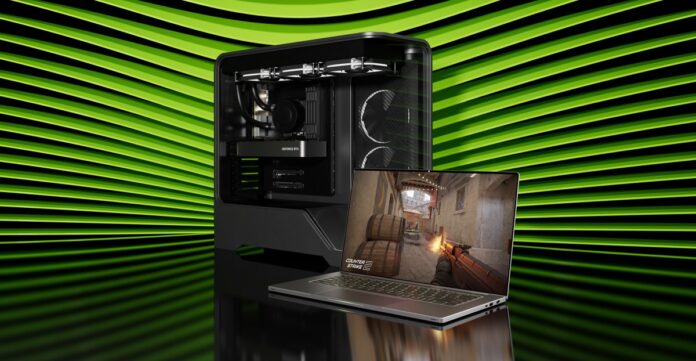
The RTX-5050 for desktops will start at $249 and have 8GB of last generation GDDR6 VRAM and 2,560 Blackwell CUDA Cores. These cards will be manufactured by third-party partners such as Asus, Gigabyte MSI, Zotac and others. Expected shipments are in the second half July. Nvidia’s Game Ready Drivers will be updated to make them compatible with the new cards. This is expected to happen in early July.
RTX 5050 laptop graphics cards are expected to draw between 35W and 100W and will use 8GB GDDR7 VRAM with 2,560 Blackwell CUDA Cores. Some models are available todayand will start at $999. Early models that launch before Nvidia releases its Game Ready Drivers will come with drivers for the Nvidia 5050 GPU. GDDR7 VRAM consumes less power than GDDR6, allowing for the laptop version of 5050 to fit in slimmer notebooks.
It seems odd that the desktop cards are using GDDR6, even though they should perform better than the laptop versions with GDDR7. The desktop RTX5050 has the same 8GB VRAM as the RTX5060, but is GDDR6 with 1,280 fewer CUDA Cores. This should result in a noticeable performance gap with the card above it.
The fine print states that this is only when the GPU is paired with an AMD Ryzen 9800X3D processor running at 1080p. Nvidia claims that the RTX 5050 in full raster is 60 percent faster than two-generation-old RTX 3500.
The RTX 5050 replaces the RTX 30, which is still one of the most used GPUs on Steam. Nvidia has never announced a desktop RTX 4005.

