
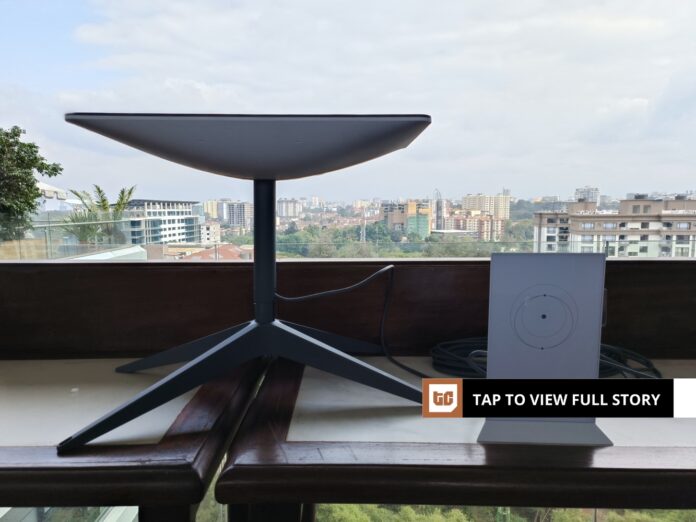
Starlink has been blocking new users for more than seven months. Now, it is accepting new sign-ups from Nairobi and other parts in Kenya. The coverage map shows that the service is available in major towns. At least three users have told TechCabal that they were able to activate their kits within this month.
Isaac Migiro said that he purchased a Starlink kit in Nairobi in December, and activated it in June.
On Monday, June 23, a retailer who sells Starlink kit told TechCabal that “Starlink has now returned to full capacity.” The network was stretched to its limits by too many users in a particular area, which resulted in slower speeds, lags and a halt on new activations. The network is still being stretched to its limit by the demand for urban areas. A new ground station was launched in Nairobi in January to relieve the pressure.
Starlink’s rapid expansion, fueled by word-of-mouth, media attention, social posts, and Elon Musk himself, has also been met with regulatory pushback. In Kenya, the government is proposing to increase satellite licence fees to $115.331, and to introduce a 0.4% turnover tax. This would be a move which would hurt smaller satellite internet service provider (ISP) companies and give a competitive edge to larger players. Starlink faces opposition in other countries, such as South Africa and Zimbabwe. This is because they operate without local approvals, or through unofficial resellers.
Get all the latest African tech news delivered to your inbox.
Starlink is still the only option for fast internet in remote or peri-urban areas where fibre is not available. Even though it costs KES 30,000 ($232), for hardware, and KES 6,500 (50 dollars) per month, the service is essential for homes, small businesses, and schools outside of city centres.
Local rivals aren’t sitting back. Safaricom offers cheaper 5G routers. Devices start at KES 3,300 ($23), and monthly plans begin at KES 4,400 ($31), which is less than half the price charged by Starlink. These plans are aimed at customers in urban and periurban areas that have decent mobile coverage.
Airtel and Starlink have teamed up to use satellite backhaul in rural expansion. Safaricom has also hinted that it is interested in exploring satellite partnerships. This indicates that the market is moving towards hybrid models, which combine fibre, mobile and satellite connections.
Starlink will have over 19,000 active Kenyan users by the end of 2024. This makes it the seventh largest ISP. It still does not have a local office, and it handles everything online. This frustrates customers who are dealing with delays.
Mark the dates! Moonshot by TechCabal will be back in Lagos, October 15-16! Join Africa’s leading founders, tech leaders, and creatives for 2 days of keynotes. Early bird tickets are now 20% off. Don’t sleep! moonshot.techcabal.com

