
Revolutionizing Protein Structure Prediction: Five Years of AlphaFold’s Impact
In 2017, shortly after completing his doctorate in theoretical chemistry, John Jumper caught wind of a confidential initiative at Google DeepMind aimed at predicting protein structures using artificial intelligence. Intrigued, he applied to join the team.
By 2020, Jumper, alongside DeepMind CEO Demis Hassabis, unveiled AlphaFold 2-a groundbreaking AI system capable of determining protein structures with atomic-level precision. This achievement matched the accuracy of traditional experimental methods but accomplished in mere hours rather than months, solving a biological puzzle that had challenged scientists for over five decades.
AlphaFold’s debut sent ripples through the scientific community, marking a pivotal moment in computational biology. As of 2024, the technology continues to evolve, with Jumper and Hassabis recognized for their transformative contributions to science.
Understanding the Complexity of Protein Folding
Proteins are essential biomolecules responsible for countless functions in living organisms-from forming structural components like muscles and feathers to facilitating oxygen transport and immune responses. Their function is intricately tied to their three-dimensional shapes, which arise from sequences of amino acids folding into complex configurations.
Predicting these shapes is notoriously difficult because a single protein can theoretically fold into an astronomical number of conformations. The challenge lies in identifying the biologically relevant structure among countless possibilities.
AlphaFold 2 leverages transformer neural networks-similar to those powering advanced language models-to focus on critical parts of the protein folding puzzle. By training on vast datasets of known protein structures and evolutionary information, the system rapidly generates highly accurate predictions.
Innovative Applications Beyond Expectations
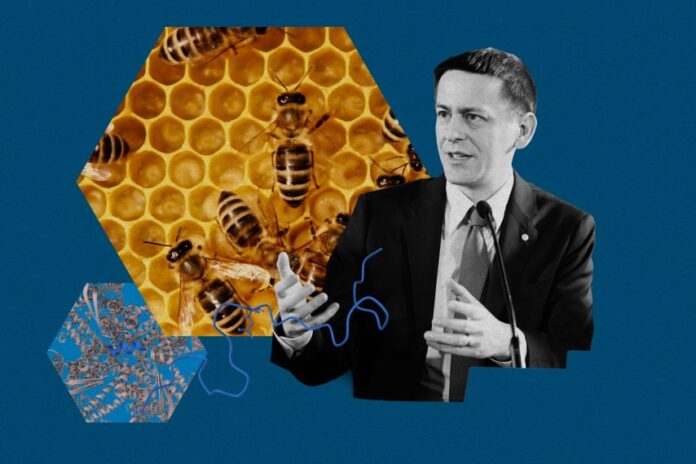
While AlphaFold was initially designed for fundamental protein structure prediction, researchers have discovered numerous creative applications. For instance, a team studying honeybee colony collapse disorder used AlphaFold to analyze proteins linked to disease resistance, a use case Jumper hadn’t anticipated.
Another exciting development is the acceleration of synthetic protein design. Computational biologist David Baker and his team at the University of Washington have harnessed AlphaFold and their own tool, RoseTTAFold, to design proteins with novel functions-such as breaking down environmental pollutants or targeting diseases more effectively than natural proteins. AlphaFold’s ability to validate designs before synthesis has sped up this process by an order of magnitude.
Moreover, some scientists have repurposed AlphaFold as a search engine to identify protein interactions. For example, researchers investigating human fertilization screened thousands of sperm surface proteins against a known egg protein, pinpointing a critical binding partner that was later confirmed experimentally. This approach would have been impractical without AI assistance.
Five Years Later: Assessing AlphaFold’s Role in Research
Kliment Verba, a molecular biologist at the University of California, San Francisco, reflects on AlphaFold’s integration into everyday lab work. “It’s an indispensable tool we use daily,” he says, though he cautions that the technology isn’t flawless. Predicting interactions involving multiple proteins or dynamic complexes remains challenging, and sometimes the AI’s confidence can be misleading-similar to how language models occasionally generate plausible but incorrect information.
Despite these limitations, Verba’s team uses AlphaFold to guide experimental design, narrowing down hypotheses and saving valuable time and resources. “It hasn’t replaced experiments but has significantly enhanced them,” he notes.
Emerging Technologies Building on AlphaFold’s Foundation
AlphaFold’s success has inspired a new generation of AI-driven tools tailored for drug discovery and molecular biology. In 2024, collaborations such as those between MIT researchers and the biotech company Recursion introduced models like Boltz-2, which predict not only protein structures but also their dynamic behaviors.
Startups like Genesis Molecular AI have launched platforms claiming improved accuracy over AlphaFold 3 for specific drug development tasks. Their interactive models allow scientists to input additional experimental data, refining predictions in real time. These advancements aim to reduce prediction errors from around two angstroms to under one angstrom-critical for accurately modeling drug-target interactions at the atomic scale.
While these innovations promise to accelerate therapeutic development, Jumper emphasizes that protein structure prediction is just one piece of a complex puzzle. “We’re not one solved protein away from curing diseases,” he remarks, highlighting the multifaceted nature of biomedical research.
Looking Ahead: Integrating AI Models for Scientific Discovery
Jumper’s future vision involves merging AlphaFold’s specialized protein prediction capabilities with the broad reasoning power of large language models (LLMs). These AI systems can interpret scientific literature and perform complex reasoning, potentially enabling more holistic approaches to biological problems.
One example is AlphaEvolve, a DeepMind project that uses LLMs to generate and evaluate solutions iteratively, already yielding breakthroughs in mathematics and computer science. Jumper anticipates similar synergies will emerge in biology, though he remains cautious about making concrete predictions.
At 39, Jumper is the youngest chemistry Nobel laureate in over seven decades. Reflecting on his career, he prefers to focus on incremental advances rather than chasing another monumental breakthrough. “Small ideas that you keep pulling on can lead to meaningful progress,” he says, underscoring a pragmatic approach to scientific innovation.

