
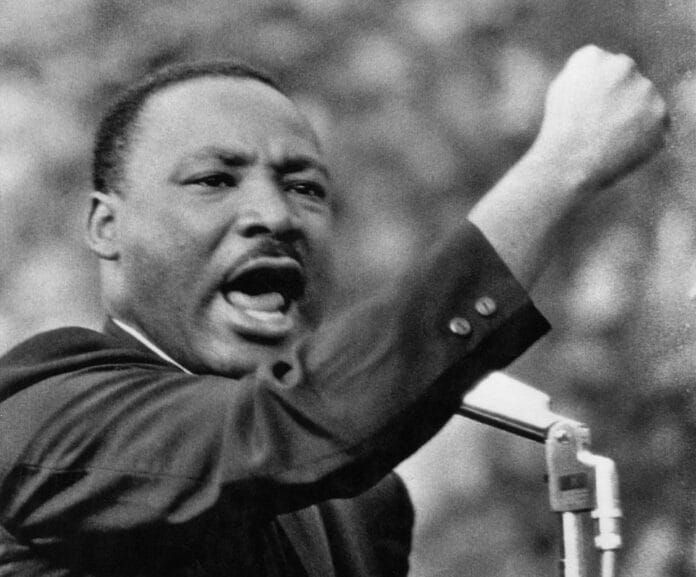
OpenAI pauses Sora’s video generations of Martin Luther King Jr.
OpenAI announced on Thursday that it has halted the ability of users to create videos that resemble the late civil rights activist Martin Luther King Jr. by using its AI video model Sora. The company claims it is adding this safeguard on the request of Dr. King’s estate, after some Sora users created “disrespectful portrayals” of his image.
While there are strong free-speech interests in depicting historical characters, OpenAI believes that public figures and their family members should have the final say on how their likenesses are used,” OpenAI stated in a statement. Post on X by its official newsroom. “Authorized estate owners or representatives can request that their likeness is not used in Sora’s cameos.”
Some users generated disrespectful depictions of Dr….— OpenAI Newsroom (@OpenAINewsroom) Some users created disrespectful depictions Dr …..
– OpenAI Newsroom (@OpenAINewsroom). October 17, 2025
This restriction comes only a few short weeks after OpenAI released its social video platform Sora. The platform allows users to create AI-generated videos that resemble historical figures, friends, or users who choose to have their likeness recreated. The launch has sparked a heated debate about the dangers of AI generated videos and how platforms should implement safeguards around the technology.
Bernice King, Dr. King’s daughter. Last week, she posted on Instagram asking people to stop sending AI videos that resembled her father. She joined Robin Williams daughter who asked Sora users not to create AI videos of her dad.
The Washington Post published an article earlier this week stating that Sora users created AI-generated video of Dr. King making monkey sounds as well as wrestling with another civil right icon, Malcolm X, are among the crude videos that look like other historical figures. These include Bob Ross, Whitney Houston, former President John F. Kennedy, and more.
Dr. King’s estate’s licensor did not respond to TechCrunch immediately when asked for comment.
The launch of Sora has raised many questions about how social media platforms handle AI videos that are copyrighted. The Sora App is also filled with videos of cartoons such as SpongeBob and South Park.October 27-29, 2025
OpenAI has added other restrictions to Sora in weeks since its launch. In October, the company announced that it would give copyright holders greater control over the type of AI videos generated using their likeness. This may have been in response to Hollywood’s initial reactions to Sora. It was not very good
OpenAI seems to be taking an increasingly hands-off approach in moderating the content of ChatGPT as it adds restrictions to Sora. OpenAI announced last week that adult users will be able to have “erotic chats” with ChatGPT within the next few months.
It seems that OpenAI, with Sora is grappling with concerns that come with AI video generation. OpenAI researchers grappled with questions in the days following the launch of the company’s AI-powered social platform, and how it fits into the nonprofit mission. OpenAI CEO Sam Altman stated that the company felt ” “trepidation” about Sora’s launch day.
Nick Turley told me earlier in the month that the best method to teach people about a new tech is to put it out there. He said the company learned this with ChatGPT and OpenAI will find it with Sora too. It appears that the company is also learning about how to distribute its technology. Maxwell Zeff, a senior reporter for TechCrunch who specializes in AI, is
Maxwell Zeff. Zeff covered the rise and fall of AI, as well as the Silicon Valley Bank Crisis, for Gizmodo and MSNBC. He is based out of San Francisco. He can be found exploring the Bay Area food scene, hiking, biking and exploring the Bay Area when he is not reporting.
You can contact or verify outreach from Maxwell by emailing [email protected] or via encrypted message at mzeff.88 on Signal.
View Bio

