
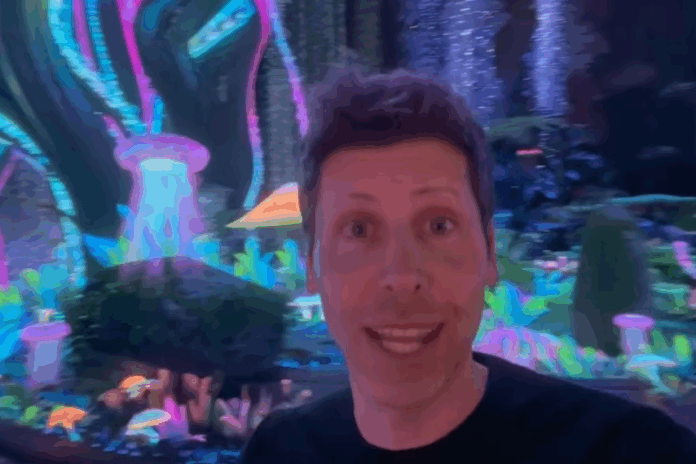
Recently, OpenAI unveiled Sora, a novel app inspired by TikTok’s endless video feed format, but with a twist: every clip is generated entirely by artificial intelligence and lasts no longer than 10 seconds. Users can craft a “cameo” – a lifelike digital avatar that replicates their voice and appearance – and incorporate other users’ cameos into their own creations, subject to permission settings.
Is Sora Here to Stay?
OpenAI is wagering that many users will embrace an environment where the authenticity of content is irrelevant, allowing them to immerse themselves in a continuous stream of AI-generated media. One user described the experience as reassuring, since there’s no ambiguity about what’s real or fabricated – everything is transparently artificial.
While this concept might be unsettling to some, Sora’s rapid ascent to the top of Apple’s US App Store charts suggests a strong appetite for this kind of content. The app currently features a variety of popular video themes, including police bodycam-style clips involving pets or well-known fictional characters, humorous deepfake speeches by historical figures like Martin Luther King Jr. discussing modern topics, and countless imaginative portrayals of religious icons navigating contemporary life.
Two main theories explain Sora’s appeal: it could be a fleeting novelty that captivates users briefly with the latest AI capabilities, or it might signal a fundamental shift in digital content consumption, where fantastical, AI-crafted creativity becomes a new norm. OpenAI’s future decisions on advertising, copyright enforcement, and content recommendation algorithms will likely influence user retention.
Financial and Environmental Implications
Although OpenAI is not yet profitable-a common scenario in Silicon Valley-the company’s investment in video generation technology is notable due to its high computational and energy demands. Producing AI-generated videos requires significantly more resources than generating images or text responses, such as those from ChatGPT.
To address these challenges, OpenAI is participating in large-scale infrastructure projects, including building data centers and power plants. Currently, Sora offers unlimited free video generation, raising questions about the sustainability of this model. CEO Sam Altman has acknowledged the need to monetize video generation but has not detailed specific strategies, leaving room for possibilities like personalized advertising or premium features.
Environmental concerns are mounting as well. While Altman has emphasized that the carbon footprint of a single ChatGPT query is minimal, the impact of generating short AI videos remains unquantified. As Sora’s popularity grows, pressure from environmental and AI ethics communities to disclose and mitigate emissions is expected to intensify.
Legal Challenges on the Horizon
Sora’s content is rife with copyrighted and trademarked material, including the use of deceased celebrities’ likenesses and copyrighted music. OpenAI has reportedly informed rights holders that they must opt out if they do not want their content included, a reversal of the usual opt-in approach. This unconventional method could provoke legal disputes, as copyright law around AI-generated content remains unsettled.
Altman has acknowledged ongoing discussions with rights holders seeking greater control over how their intellectual property is used within Sora. The company plans to implement more detailed permissions, though some unauthorized content may still slip through.
Another complex issue involves the use of real individuals’ cameos. While users can restrict who can feature their avatars, the extent of control over the context and behavior of these cameos in videos is still evolving. In response to concerns, Sora’s lead, Bill Peebles, announced new features allowing users to block their cameos from appearing in political content or using specific language. However, the effectiveness of these safeguards remains to be seen, and misuse could lead to legal action against OpenAI.
The Future of AI-Generated Video Content
Sora is currently in a limited-access phase, distributed via invite codes, so its full impact is yet to be observed. When widely available, it will serve as a critical experiment in whether AI-crafted videos can captivate audiences more effectively than traditional user-generated content. Ultimately, Sora challenges not only OpenAI’s technological prowess but also society’s willingness to engage with a reality increasingly shaped by synthetic media.

