
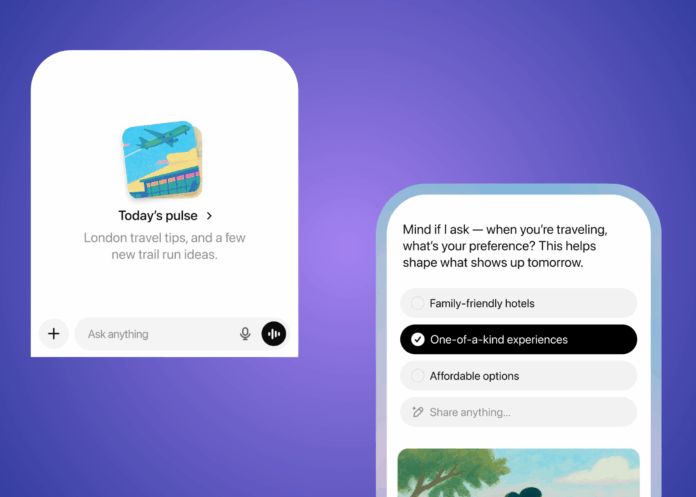
OpenAI has unveiled Pulse, an innovative feature designed to deliver personalized, research-driven updates every morning. Currently available in preview on the ChatGPT mobile app exclusively for $200/month Pro subscribers, Pulse transforms ChatGPT from a reactive query tool into a context-sensitive assistant. It achieves this by generating topical cards based on a user’s recent conversations, explicit feedback, and opt-in integrations with apps like calendar and email.
How Pulse Operates Behind the Scenes
Pulse continuously analyzes various user signals such as recent chat history, long-term preferences, thumbs-up/down feedback, and data from connected applications (when enabled). Instead of presenting an endless stream of information, it curates concise, visually engaging cards that offer both summaries and direct links for deeper exploration. Early use cases include personalized news digests and context-aware recommendations-for instance, travel suggestions aligned with upcoming calendar events.
Data Integration and User Control
By default, Pulse’s integrations are disabled, giving users full control over what data is shared. When users opt in, Pulse can access information from services like Gmail and Google Calendar to tailor its updates-such as preparing meeting briefs or sending itinerary reminders. OpenAI emphasizes that these features are optional and manageable through in-app settings, ensuring transparency and user autonomy over connected accounts and memory usage.
Current Availability and Future Expansion
Pulse is currently being introduced to Pro subscribers on the ChatGPT mobile platform as a dedicated tab. OpenAI plans to expand access “soon” after refining the product and optimizing computational efficiency. The initial Pro-only rollout reflects the significant processing resources required to deliver these personalized, proactive updates.
Shifting Toward Autonomous, Goal-Driven Assistance
OpenAI positions Pulse as a foundational step toward more agent-like AI behavior, where the system autonomously tracks user goals and proactively provides relevant updates without explicit prompts. This marks a transition from traditional chat-based interactions to workflow-oriented assistants that understand user context and schedules. This approach aligns with OpenAI’s broader vision of AI agents offering anticipatory support rather than merely responding to queries.
Leadership Insights on Pulse’s Significance
OpenAI CEO Sam Altman has described Pulse as his “favorite feature” introduced so far, initially launching it for Pro users. He highlighted how the feature leverages user interests and recent conversations to deliver tailored daily updates, hinting at future enhancements that will deepen personalization as users continue to share preferences. OpenAI’s official communications echo this focus on delivering proactive, daily insights.
Positioning Within the Competitive Landscape
While Pulse enters the competitive “morning briefing” market, it distinguishes itself by integrating live user context and chat history rather than relying on generic news headlines. It nudges ChatGPT closer to the capabilities of advanced assistant platforms that monitor calendars, draft emails, and prepare tasks in advance-yet it remains seamlessly embedded within the ChatGPT app, avoiding the complexity of standalone agent software.
Conclusion: Defining a New Era of Proactive AI Assistance
Pulse redefines ChatGPT as a proactive assistant that interprets user signals, reviews daily schedules, and delivers concise, customized briefings. Initially exclusive to Pro users on mobile, OpenAI plans to extend availability to Plus subscribers after further optimization. The future potential of Pulse hinges on implementation details such as API integrations, enterprise features, and data retention policies, which will determine its evolution from morning briefs to fully autonomous agent workflows.

