
Optical Character Recognition (OCR) technology transforms images containing text-such as scanned documents, invoices, or photos-into editable, machine-readable formats. Initially based on rigid, rule-driven methods, OCR has advanced into a sophisticated field powered by neural networks and vision-language models that can interpret complex layouts, multiple languages, and even handwritten content.
Understanding the OCR Process
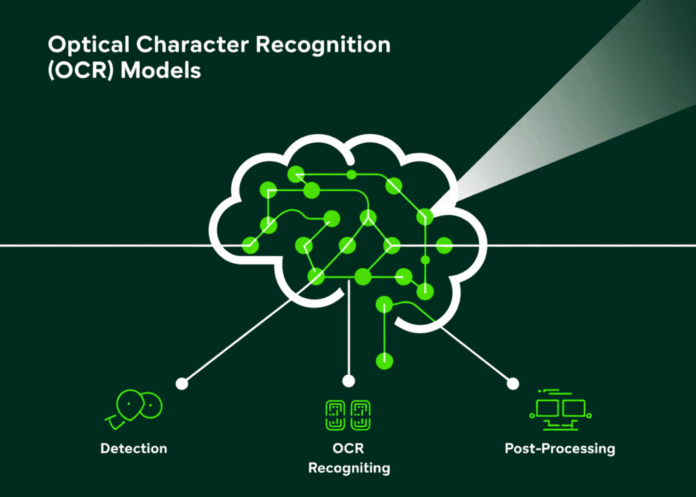
OCR systems generally address three fundamental tasks:
- Text Localization – Identifying the exact regions within an image where text is present. This step must accommodate challenges like skewed angles, curved text lines, and cluttered backgrounds.
- Text Interpretation – Translating the detected text areas into characters or words. The accuracy here depends on the model’s ability to manage low-resolution images, diverse fonts, and visual noise.
- Refinement and Structuring – Applying language models or dictionaries to correct recognition mistakes and maintain the document’s original format, whether it involves tables, columns, or form fields.
These challenges intensify when processing handwritten notes, non-Latin scripts, or highly formatted documents such as scientific articles and financial statements.
Evolution of OCR Technologies
- Traditional OCR Techniques: Early systems depended on image binarization, segmentation, and template matching, which worked well only for clean, printed text.
- Deep Learning Integration: The introduction of convolutional and recurrent neural networks eliminated the need for manual feature extraction, enabling end-to-end text recognition.
- Transformer Models: Architectures like Microsoft’s TrOCR have enhanced OCR capabilities, especially in recognizing handwriting and supporting multiple languages with better adaptability.
- Multimodal Vision-Language Models: Advanced models such as Qwen2.5-VL and Llama 3.2 Vision combine OCR with contextual understanding, allowing them to interpret not only text but also complex elements like diagrams, tables, and mixed media content.
Top Open-Source OCR Solutions Compared
| OCR Model | Core Architecture | Key Advantages | Ideal Applications |
|---|---|---|---|
| Tesseract | LSTM-based | Highly mature, supports over 100 languages, widely adopted | Large-scale digitization of printed documents |
| EasyOCR | PyTorch CNN + RNN | User-friendly, GPU-accelerated, supports 80+ languages | Rapid prototyping and lightweight OCR tasks |
| PaddleOCR | CNN + Transformer hybrid | Strong performance in Chinese and English, excels at extracting tables and formulas | Multilingual, structured document processing |
| docTR | Modular (DBNet, CRNN, ViTSTR) | Highly flexible, compatible with PyTorch and TensorFlow | Research projects and customized OCR pipelines |
| TrOCR | Transformer-based | Superior handwriting recognition, robust generalization | Handwritten and mixed-script documents |
| Qwen2.5-VL | Vision-language model | Context-aware, adept at interpreting diagrams and complex layouts | Documents with mixed media and intricate formatting |
| Llama 3.2 Vision | Vision-language model | Combines OCR with reasoning capabilities | Multimodal tasks and question answering on scanned documents |
Current Directions in OCR Research
Recent advancements in OCR focus on several key areas:
- Unified Frameworks: Emerging models like VISTA-OCR integrate text detection, recognition, and spatial understanding into a single generative system, minimizing error accumulation across stages.
- Support for Underrepresented Languages: Benchmarks such as PsOCR reveal significant performance gaps in languages like Pashto, driving efforts toward multilingual fine-tuning and dataset expansion.
- Efficiency Enhancements: Innovations like TextHawk2 optimize transformer architectures by reducing the number of visual tokens processed, lowering computational costs while maintaining accuracy.
Final Thoughts
The open-source OCR landscape offers a diverse array of tools balancing precision, speed, and resource demands. Tesseract remains a reliable choice for printed text digitization, while PaddleOCR is well-suited for complex, multilingual, and structured documents. TrOCR leads in handwriting recognition, pushing the envelope for mixed-script inputs. For applications requiring deeper document comprehension beyond mere text extraction, vision-language models such as Qwen2.5-VL and Llama 3.2 Vision provide powerful, albeit resource-intensive, solutions.
Ultimately, selecting the optimal OCR tool hinges on your specific document types, language requirements, structural complexity, and available computational resources. Conducting tailored benchmarks on your own datasets is the most effective strategy to identify the best fit for your needs.

