
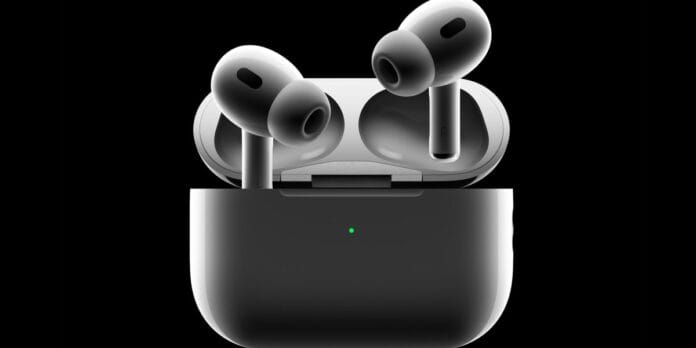
I was thrilled when the US Food and Drug Administration approved hearing-aid software that could be purchased over-the counter for Apple’s AirPods Pro, at a price of around $200. I have mild to moderate hearing loss and tinnitus. My everyday programmed hearing devices cost just over $2,000. I chose this option after my audiologist suggested a $5,000 pair. Health insurance in the US doesn’t cover hearing aids. The vast majority of users pay for their devices and any maintenance. There is little competition in the hearing-aid industry because 90 percent of the market is controlled by a few companies. The typical patient visits an audiology clinic to take a hearing test. They then get an audiogram, which is a graph that plots decibel levels versus frequencies to show the loudness of various sounds for you to be able to hear them. Finally, they receive a recommendation, which can feel like a high pressure sales pitch.
Prices are expected to drop: In October 2022 the FDA will approve the sale of hearing aids that do not require a prescription or an audiology exam. These options start at around $200 but are as different as drugstore reading lenses are from prescription lenses.
Starting with the AirPods Pro 2 Apple offers something slightly different. Regular earbuds with many of same features as OTC Hearing Aids. I’m excited that a major technology company has entered the field.
For mild hearing loss, the most important features are programmability and Bluetooth functionality. They also include the ability to feed sound into both ears. Many hearing aids offer these features, but some OTC options are less reliable and robust.
COURTESY of Apple
With the AirPods Pro ‘hearing health experience,’ you can take a test with your phone and the AirPods. Your phone will then use that data to program your hearing aids. There’s no need to visit an audiologist or wait in a waiting room with a poster that reminds you hearing loss is linked to cognitive decline. And there’s no cost-related low moments afterward.
The AirPods Pro 2 are just okay. I wanted them to be great, but they aren’t. The AirPods Pro 2 are a good way for people with mild hearing loss, to test out some of the features of a hearing device. However, they have some drawbacks. AirPods made my tinnitus worse after a single day of wearing them. Apple may want to add a feature to manage tinnitus in the future. It is estimated that 10% to 15% adults suffer from it. The devices can also cause swimmer’s ears after long hours of use. Some people feel strange wearing such bulky devices, even though they may make you appear more like someone who is saying “Don’t speak to me. I’m listening my music.” than someone with hearing aids.
The majority of other drawbacks of OTC hearing devices and some prescription hearing aids are also shared by other devices in their class: poor sound quality, inadequate distinguishing between sounds, and difficulty with certain sound environments like crowded rooms. While the AirPods may not be as good as my budget-priced hearing aid, they have incredible potential. Ashley Shew, the author of is

