
OpenAI has been a one-man show for the past two years. With his showbiz style, fundraising glitz and a slick image, CEO Sam Altman eclipses all the other big names in the firm. Even after his botched ouster, he is back at the top and more famous than ever. You can see the company’s future if you look past its charismatic leader. Altman, after all, is not the person who built the technology that has made the company famous.
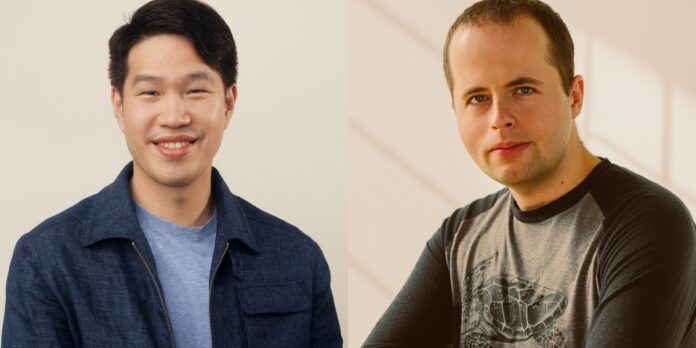
This responsibility falls to OpenAI’s twin heads of Research–chief researcher Mark Chen and Chief scientist Jakub Pahocki. They share the responsibility of ensuring that OpenAI is always one step ahead of its powerful rivals, such as Google.
I had an exclusive chat with Chen and Pachocki during a recent visit to London where OpenAI will be setting up its first international office by 2023. We discussed how they manage the tension between research and products. We also discussed why they believe coding and mathematics are the keys to creating more capable models for all purposes; what they mean when they speak about AGI and what happened to OpenAI’s superalignment group, which was set up by former chief scientist Ilya Suksever, the cofounder of the firm, to prevent a hypothetical AI from going rogue. The team disbanded shortly after he left.
I wanted to know where they were at in the lead-up to OpenAI’s biggest product release for months: GPT-5.
There are reports that the next-generation model of the firm will be released in August. Altman, OpenAI and their official line is that GPT-5 will be released “soon”. The anticipation is high. OpenAI’s GPT-3 and GPT-4 leaps raised the bar for what was thought to be possible with this technology. And yet delays to the launch of GPT-5 have fueled rumors that OpenAI has struggled to build a model that meets its own–not to mention everyone else’s–expectations.
But managing expectations is part of a company’s job, especially one that has been setting the agenda for several years. And Chen and Pachocki are the ones who set the agenda at OpenAI.
twin peaks
the firm’s London main office is located in St James’s Park a few hundred metres east of Buckingham Palace. But I met Chen in a conference in a coworking room near King’s Cross. OpenAI uses this space as a pied-a-terre to be in the heart London’s tech district (Google DeepMind, Meta and other companies are located just around the corner). Laurance Fauconnet was OpenAI’s director of research communications. She sat at the end table with an open laptop.
Chen is a clean-cut man, wearing a maroon shirt. He is media-trained and comfortable speaking to a journalist. In the “Introducing GPT-4o”he is seen flirting with a bot . Pachocki’s look in a black elephant logo tee is more TV movie hacker-like. He looks at his hands when he speaks.
The pair are more of a double act than it first appears. Pachocki summarized their roles. He said that Chen manages and shapes the research teams. “I am in charge of setting the research roadmap, and establishing the long-term vision for our technical team.”
Chen said that the roles are fluid. “We are both researchers and we pull on technical threads.” We fix whatever we can.
Chen worked as a quantitative trading analyst at Jane Street Capital on Wall Street, where he created machine-learning models for the futures market. He was the driving force behind OpenAI’s groundbreaking generative image model, DALL-E. He then worked to add image recognition to GPT-4, and led the development Codex, a generative coding system that powers GitHub Copilot.
Pachocki, who had a career as an academic in theoretical computer sciences, joined OpenAI in 2017. He will replace Sutskever in 2024 as chief scientist. He is also one of the architects of OpenAI’s reasoning models, especially o1 and O3, which are designed to tackle difficult tasks in science and math.
They were buzzing when we met, fresh from the high of winning two back-to-back awards for their technology.
OpenAI’s large-language models placed second in the AtCoder World Tour Finals on July 16, one the world’s hardest programming competitions. OpenAI announced on July 19 that one of its models achieved gold-medal results in the 2025 International Math Olympiad – one of the most prestigious math competitions in the world.
Not only did OpenAI’s math result make headlines, but Google DeepMind announced two days later that its model had achieved the exact same score in the same contest. Google DeepMind waited until the results were checked by the organizers to make an announcement. OpenAI, on the other hand, had marked its own answers.
The result speaks for itself for Chen and Pachocki. It’s the programming victory that they’re most excited for. Chen told me, “I think it’s underrated.” He said that a gold medal in the International Math Olympiad would put you in the top 20-50 competitors. OpenAI’s AtCoder model was ranked in the top two in the contest: “To break through to a really new tier of human performance is unprecedented.”
Go, go, go!
OpenAI employees still like to claim they work in a research laboratory. But the company has changed a lot since the release of ChatGPT, three years ago. The company is now competing with the largest and richest tech companies in the world, valued at $300 billion. Research that pushes the envelope and eye-catching demonstrations are no longer enough. It has to get products into people’s hand–and it does.
OpenAI continues to release new products. It has released major updates to the GPT-4 series and launched a string generative image and videos models. It also introduced the ability to speak to ChatGPT using your voice. It launched a new wave in reasoning models six months ago with its o1 version, followed by o3. Last week, it released the browser-based agent Operator. It claims that over 400 million people now use its products each week and submit 2,5 billion prompts per day. Fidji SIMO, OpenAI’s new CEO of applications and incoming CEO, has plans to continue the momentum. In a memo sent to employees, she said she was looking forward to “helping OpenAI’s technology into the hands of many more people around the globe,” where it will “unlock greater opportunities for more people” than any other technology.
When I asked OpenAI how they balance open-ended research with product development, they replied that it is a difficult task. Pachocki said, “This is a topic we’ve been thinking about since a long time. This was before ChatGPT. “If we’re serious about building artificial general intelligence, there are so many things you can do along the way with this technology, so many tangents that you can go down, that will be huge products.” In otherwords, keep shaking the trees and harvest what you possibly can.
OpenAI people often mention that releasing experimental models into the world is a necessary part to research. The goal was for people to be aware of the progress that this technology has made. Altman told me in 2022 that they wanted to educate the public about what was coming, so we could be part of a difficult societal discussion. OpenAI, the makers of this new technology, was also curious about what it could be used for. They wanted to see what people would do with it.
Does that still hold true? They both answered at the same moment. Chen replied, “Yes!” Pachocki replied, “To a certain extent.” “I wouldn’t call it research that iterates into product,” said Pachocki. “But now that the models are at or near the limits of what can be measured with classical benchmarks, and many of the long-standing problems that we have been thinking about are beginning to fall away, we’re really at the point where we can see how the models perform in the real world.” Przemyslaw Debiak, also known as Psyho, is the programmer who beat OpenAI at this year’s AtCoder competition, held in Japan. The contest was a marathon puzzle-solving competition in which competitors were given 10 hours to solve a complex programming problem. Psyho wrote on X that he was “completely exhausted… I am barely alive”
Chen, Pachocki and other members of the competitive coding world have strong ties. Both have participated in international coding competitions in the past, and Chen coaches the USA Computing Olympiad Team. I asked if their personal enthusiasm for competitive programming colors their perception of how important it is for a female model to do well at such a challenging task.
Both laughed. “Definitely,” said Pachocki. “So, Psyho’s a legend.” He has been the number-one competitor for many, many years. Debiak and Pachocki worked together at OpenAI.
Pachocki preferred coding contests that had shorter problems and concrete solutions. Debiak, on the other hand, preferred longer problems with no obvious answer.
Pachocki remembered that Debiak used to make fun of him, saying the contests he liked would be automated much sooner than the ones I did. “I was very invested in the performance this model had in this competition.” “We’ve seen them get better than Jakub, and better than myself.” It feels like Lee Sedol is playing Go.”
Lee Sedol was the master Go player that lost a series matches to DeepMind AlphaGo’s game-playing algorithm in 2016. The results shocked the international Go community, and Lee gave up professional play. Last year, he told The New York Times: “Losing against AI, in a way, meant that my entire world was collapsing… I could no longer play the game. But unlike Lee, Chen, and Pachocki, are delighted to be surpassed.
Why should the rest care about these niche victories? It’s obvious that this technology, designed to mimic and ultimately stand in for human intellect, is being built by people who think the height of intelligence is winning a math competition or competing with a legendary programmer. Is it a concern that this view of intelligent is skewed towards the analytical, mathematical end of the spectrum?
Chen told me, “I think you’re right–you know we do want to create a model that accelerates ourselves.” “We see this as a very rapid factor to progress.” “We’re discussing programming and math,” said Pachocki. “But it’s about creativity, coming with novel ideas, and connecting ideas from different sources,” said Pachocki.
Take a look at the two most recent competitions. “In both cases there were problems that required very hard, outside-the-box-thinking.” Psyho spent the first half of the competition thinking, and then came up a solution which was novel and quite different than anything our model had looked at. “How can we get models to come up with this kind of novel insight?” To actually advance our understanding? They are capable of doing that in limited ways. But I believe this technology has the ability to really accelerate scientific advancement.”
When I was asked if the focus on math or programming was a bad thing, I conceded that it might be fine if we were building tools to help us with science. I said that we don’t want large language models with people skills to replace politicians.
Chen drew a face and stared up at the ceiling. Why not?
The missing piece
OpenAI’s founding was characterized by a level of hubris even by Silicon Valley standards. It boasted about its goal to build AGI when AGI still seemed kooky. OpenAI is still as enthusiastic about AGI as it was when it was founded. It has done more than anyone else to make AGI an important multi-billion dollar concern. But it’s still not there. I asked Chen Pachocki to tell me what they thought was missing.
Pachocki stated, “I believe the best way to imagine the future is to study the technology we have today in depth.” “OpenAI has always viewed deep learning as a powerful and mysterious technology with lots of potential. We’ve been trying understand its bottlenecks. What can it do? What can it do? Why is this? OpenAI is doing everything to answer that question.
Pachocki told my that we are probably just at the beginning of this new paradigm. “Really, what we are thinking about is how to get these models learn and explore on a long-term basis and actually deliver new ideas.” We haven’t solved the problem. You have to read a lot of text to get an approximation of human knowledge.”
OpenAI will not say what data is used to train its models, or provide details about their size and shapes–only that they are working hard to make the entire development process more efficient.
These efforts have made them confident that the so-called scaling law, which suggests that models will get better as you add more computing power to them, is not going away.
Chen insisted, “I don’t believe there’s any evidence that scaling law is dead in any way.” “There have always existed bottlenecks, right?” Sometimes they have to do with how models are built. Sometimes it’s about data. It’s fundamentally about finding the research to break through the current bottleneck.”
Faith in progress is unshakeable. I mentioned something Pachocki said about AGI during an interview with Nature in May. “When I joined OpenAI, I was still one of the biggest skeptics in the company.” His face looked doubtful.
He said, “I’m sure I wasn’t skeptical about the concept.” “But I think I’m–” He paused and looked at his hands on a table in front of himself. “When I first joined OpenAI, i expected the timelines would be longer before we reached the point where we are today.”
He said: “There’s many consequences of AI.” “But automated research is the one that I am most concerned about.” When we examine human history, much of it is about the technological progress and humans creating new technologies. The moment when computers can create new technologies by themselves seems to be a very important inflection point.
We already see how these models help scientists. When they can work on longer horizons, when they’re able establish research programs by themselves, the world will feel significantly different.
Chen believes that this ability of models to work independently for longer is crucial. “I think everyone has a different definition of AGI,” said Chen. “But the concept of autonomous time, the amount of time the model can spend on a difficult task without hitting a dead-end–that’s what we’re after.” I was still struck by the way that Chen and Pachocki made AGI seem so mundane. Compare this to how Sutskever reacted when I spoke with him 18 months ago. He told me that the project would be monumental and earth-shattering. “There will be before and after.” Faced by the enormity of the project, Sutskever shifted his career focus from designing better models to learning how to control technology that he thought would soon be more intelligent than him.
Sutskever, a safety researcher at OpenAI, set up a team he called the superalignment two years ago. He would lead it with Jan Leike. This team was supposed to use a fifth of OpenAI resources to figure out how best control a hypothetical superintelligence. The team is no longer in existence, as most of the members, including Sutskever, have left OpenAI. Leike said that he quit because the team did not receive the support it deserved. He wrote on X: “Building machines smarter than humans is a dangerous endeavor.” OpenAI has a huge responsibility for the entire human race. Over the past few years, safety culture has been pushed aside in favor of shiny products.
When I asked Chen and Pachocki about such concerns, they responded in the affirmative. Chen replied that “a lot of these decisions are highly individual.” “You know, you can sort of, you know…?”
he started again. “They may have a belief in the future of their field and that they will be able to reap the benefits of their research. You know, the company might not change in the way you would like. It’s a dynamic field.”
He repeated, “A lot are personal decisions.” “Sometimes, the field evolves in a manner that is not consistent with how you are doing research.”
Both of them insist that alignment is now part and parcel of the core business, rather than a concern of a specific team. Pachocki says that these models will not work unless they perform as expected. It’s not a priority to align a hypothetical superintelligence model with your goals when existing models are already a challenge.
Pachocki stated that two years ago, the risks we imagined were mostly theoretical. “The world looks very different today, and I believe that a lot alignment problems are now very practical motivated.”
Yet, experimental technology is being turned into mass-market product faster than ever. Does this really never lead to disagreements?
Pachocki said, “I am often given the luxury to really think about the long-term and where the technology is heading.” Mark is responsible for addressing the realities of the process, both in terms of the people involved and the broader needs of the company. It’s not a disagreement but there’s a natural tension that manifests between us between these different objectives and challenges that the company faces.
Chen jumped into the conversation: “I just think it’s a very delicate equilibrium.”
We have removed a reference to an Altman X message about GPT-5. OpenAI’s reasoning model was updated to include Sutskever.

